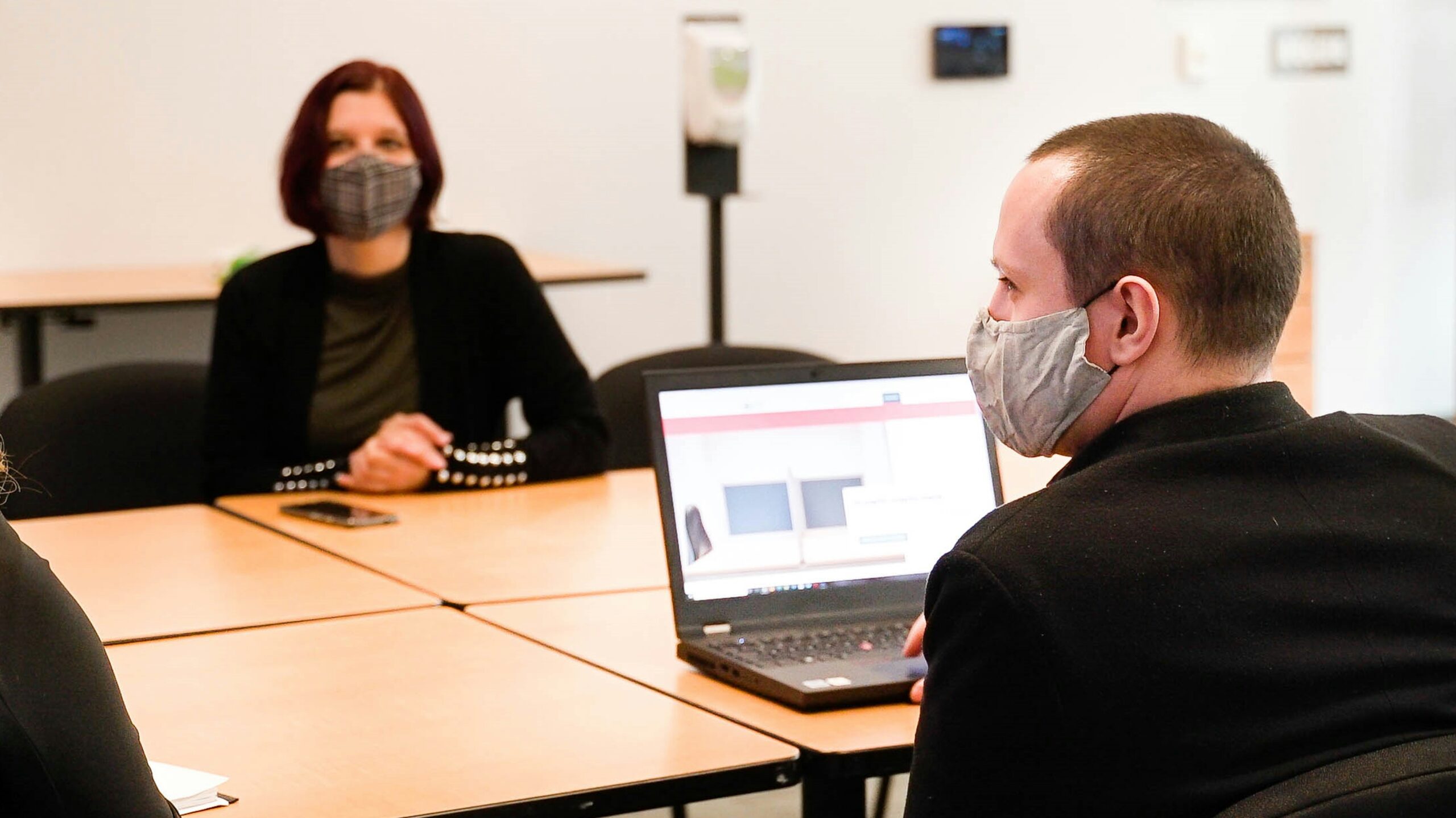

Remote work has transformed the hiring landscape. Today, many companies recruit talent through virtual or hybrid interviews, where your first impression happens through a screen rather than across a desk.
For job seekers, this shift presents both opportunities and challenges. On one hand, remote interviews remove geographic barriers and open global opportunities. On the other hand, candidates must master new skills like presenting themselves professionally on camera and demonstrating remote collaboration abilities.
That’s why mastering remote work interview tips has become essential for modern job seekers.
A virtual interview is more than simply answering questions online. Employers are also evaluating:
- Your ability to communicate remotely
- Your professionalism in a digital environment
- Your self-management and independence
- Your familiarity with remote collaboration tools
Many organizations now rely on remote hiring practices to identify candidates who can succeed in distributed teams. According to industry guidance on remote hiring processes, interviewers also observe how candidates manage distractions, communicate digitally, and handle unexpected interruptions during virtual meetings. (emerald)
In this comprehensive guide, we’ll explore the most effective remote work interview tips that will help you prepare for both virtual and hybrid interviews and stand out as a confident, capable remote professional.
Why Remote Work Interview Tips Matter More Than Ever
Before diving into the strategies, it’s important to understand why remote work interview tips are critical in today’s hiring process.
Remote work has moved from a temporary trend to a permanent workforce model. Companies across industries now hire talent across different cities, countries, and time zones.
Because of this shift, employers look for specific qualities during remote interviews:
Key Skills Employers Evaluate in Remote Interviews
- Self-discipline and independence
- Digital communication skills
- Time management
- Technical adaptability
- Problem-solving ability
Unlike traditional interviews, recruiters cannot easily evaluate body language or office behavior. Instead, they rely on virtual cues and communication clarity to assess candidates.
For example, maintaining eye contact with the camera, responding clearly, and demonstrating strong listening skills can significantly improve how you are perceived in a remote interview. (vamoswatu.com)
Understanding these expectations will help you apply the right remote work interview tips to make a strong impression.
Remote Work Interview Tips: Virtual vs Hybrid Interviews
One of the most important remote work interview tips is understanding the difference between virtual interviews and hybrid interviews.
Many candidates assume both formats are identical, but they require slightly different preparation strategies.
Comparison Table: Virtual vs Hybrid Interviews
| Interview Type | Description | Candidate Focus | Common Tools |
|---|---|---|---|
| Virtual Interview | Entire interview conducted online | Camera presence and digital communication | Zoom, Google Meet, Microsoft Teams |
| Hybrid Interview | Combination of remote and in-person interviews | Adaptability between virtual and physical environments | Video conferencing + onsite meetings |
| Asynchronous Video Interview | Candidate records answers to pre-set questions | Clarity and confidence in recorded responses | HireVue, SparkHire |
Understanding the format allows you to tailor your preparation and apply the right remote work interview tips.
Remote Work Interview Tips for Pre-Interview Preparation
Preparation is the foundation of a successful remote interview. Many candidates focus only on answers to interview questions, but remote interviews require technical and environmental preparation as well.
Let’s explore some essential remote work interview tips you should apply before the interview even begins.
Remote Work Interview Tips: Test Your Technology in Advance
The first rule of remote interviews is simple: technology must work flawlessly.
Nothing disrupts an interview faster than technical issues.
Before the interview:
- Test your internet connection
- Check your camera and microphone
- Install necessary software updates
- Test the interview platform (Zoom, Teams, etc.)
- Ensure headphones or microphones function properly
You should also prepare a backup plan in case of technical problems.
Examples include:
- Having a phone ready to join the call
- Keeping the interviewer’s contact information
- Restarting your device beforehand
Handling technical interruptions calmly and professionally can even demonstrate problem-solving skills during a remote interview. (CaseBasix)
This simple preparation step is one of the most overlooked remote work interview tips, yet it can make or break your interview experience.
Remote Work Interview Tips: Create a Professional Interview Environment
Your surroundings speak volumes during a virtual interview.
Your background is essentially your digital office.
Employers pay attention to:
- Lighting
- Background clutter
- Noise levels
- Camera positioning
A professional environment should include:
- Neutral or tidy background
- Good lighting facing your face
- Minimal distractions
- A quiet room
Experts recommend using a clean workspace and eliminating distractions such as notifications or background noise to maintain professionalism during a virtual interview. (Pumble)
Quick Setup Checklist
- Position your camera at eye level
- Sit facing a light source
- Use a neutral background
- Silence notifications
- Inform others not to interrupt
These small details create a strong first impression, which is essential when applying remote work interview tips.
Remote Work Interview Tips: Dress Professionally Even at Home
One of the most common mistakes candidates make during remote interviews is dressing casually.
Even though you’re at home, professionalism still matters.
Dress exactly as you would for an in-person interview.
Recommended attire for remote interviews
- Business casual or professional clothing
- Solid colors rather than busy patterns
- Avoid reflective jewelry or accessories
Dressing professionally helps you:
- Appear confident
- Demonstrate seriousness about the role
- Maintain a professional mindset
Some career experts even recommend dressing fully from head to toe, since unexpected situations might require standing up during the interview. (Remote First Jobs)
This psychological preparation is one of the most effective remote work interview tips.
Remote Work Interview Tips: Research the Company and Role
Another critical step is understanding the company you are interviewing with.
Remote teams often prioritize culture fit and communication style, so you should research the organization carefully.
Research areas before a remote interview
- Company mission and values
- Remote work policies
- Collaboration tools used
- Team structure
- Recent company news
You should also understand the job description thoroughly.
Prepare examples that demonstrate:
- Remote collaboration experience
- Self-management skills
- Digital communication ability
Employers often ask questions such as:
- “What tools do you use for remote collaboration?”
- “How do you stay productive when working from home?”
- “How do you communicate with remote teammates?”
Being prepared with clear answers is one of the most valuable remote work interview tips.
Remote Work Interview Tips: Prepare Your Remote Work Story
In traditional interviews, candidates often discuss office experiences.
In remote interviews, recruiters want to know how you work independently and manage digital collaboration.
Your responses should include examples demonstrating:
- Time management
- Remote communication
- Task ownership
- Problem-solving
A useful framework for structuring answers is the STAR method:
STAR Method Breakdown
- Situation – Explain the context
- Task – Describe your responsibility
- Action – Explain what you did
- Result – Highlight the outcome
This approach allows you to present clear, structured responses during virtual interviews.
Remote Work Interview Tips: Practice Camera Communication
Camera communication is a skill many candidates overlook.
However, virtual interviews require a slightly different communication style.
Important camera communication tips
- Look at the camera, not the screen
- Maintain good posture
- Speak clearly and slowly
- Smile naturally
- Avoid interrupting
These subtle cues help create the illusion of eye contact, making the conversation feel more personal and engaging.
Strong digital communication is one of the most powerful remote work interview tips because it helps you stand out even when competing against global candidates.
Remote Work Interview Tips: Prepare Questions for the Interviewer
Interviews are not one-sided conversations.
Asking thoughtful questions demonstrates:
- Curiosity
- Preparation
- Professional maturity
Here are excellent questions to ask during remote interviews:
- How does your team collaborate remotely?
- What tools do employees use daily?
- What does success look like in this role?
- How does the company support remote employees?
Thoughtful questions also help you evaluate whether the company’s remote culture fits your work style.
The shift toward remote work has transformed the hiring process. Virtual and hybrid interviews now dominate recruitment, making it essential to master effective remote work interview tips.
In this first section, we explored:
- Why remote interviews are different
- How virtual and hybrid interviews work
- How to prepare your environment and technology
- How to present yourself professionally on camera
These foundational strategies ensure you enter your interview with confidence and professionalism.
Advanced Remote Work Interview Tips for Virtual & Hybrid Interviews
After preparing your environment, technology, and mindset, the next stage is mastering how you perform during the interview itself. Even highly qualified candidates sometimes lose opportunities simply because they fail to communicate effectively in a virtual setting.
Applying advanced remote work interview tips helps you present yourself as someone who can thrive in a remote or hybrid workplace.
Remote employers want candidates who can:
- Communicate clearly across digital platforms
- Manage time independently
- Collaborate without constant supervision
- Solve problems without immediate support
If you demonstrate these qualities during the interview, you significantly increase your chances of success.
Remote Work Interview Tips: Master Virtual Body Language
In traditional interviews, body language plays a major role in communication. The same principle applies to virtual interviews, but it requires slightly different techniques.
Camera presence can influence how confident and professional you appear.
Effective virtual body language techniques
- Sit upright with confident posture
- Keep your hands visible occasionally when speaking
- Avoid excessive movements or fidgeting
- Maintain natural facial expressions
- Nod occasionally to show active listening
These non-verbal cues signal engagement and professionalism.
Camera positioning matters
Proper camera positioning helps you appear confident and attentive.
Best camera setup:
- Camera positioned at eye level
- Frame your head and shoulders
- Maintain comfortable distance from the screen
- Avoid looking down at your camera
These small adjustments greatly improve your virtual presence and reinforce effective remote work interview tips.
Remote Work Interview Tips: Demonstrate Remote Productivity
Employers hiring for remote positions want assurance that you can stay productive without supervision.
During your interview, emphasize examples that show:
- Self-motivation
- Task prioritization
- Time management
- Accountability
Ways to demonstrate productivity during interviews
You might explain:
- How you organize daily tasks
- How you track progress on projects
- How you avoid distractions while working remotely
Examples of productivity tools you could mention include:
- Task management apps
- Calendar scheduling tools
- Collaboration platforms
Mentioning these tools shows you understand the structure of remote work environments.
Remote Work Interview Tips: Highlight Remote Collaboration Skills
Many candidates assume remote jobs require mostly independent work. In reality, remote teams collaborate constantly using digital tools.
Interviewers often want to know how you communicate with colleagues in different locations.
Remote collaboration skills employers value
- Clear written communication
- Video meeting etiquette
- Cross-time-zone coordination
- Conflict resolution in digital communication
- Project tracking and reporting
If possible, share examples of situations where you:
- Collaborated with remote teammates
- Managed a project across different locations
- Resolved misunderstandings in digital communication
Strong collaboration stories significantly strengthen your remote work interview tips strategy.
Remote Work Interview Tips: Answer Common Remote Interview Questions
Many virtual interviews include questions specifically designed to test remote work readiness.
Preparing for these questions in advance is one of the most effective remote work interview tips.
Common remote work interview questions
- How do you stay productive when working remotely?
Suggested response strategy:
- Explain your daily work structure
- Mention productivity tools
- Highlight accountability practices
- How do you communicate with remote teammates?
Focus on:
- Video meetings
- Messaging platforms
- Clear written updates
- Project tracking systems
- How do you handle distractions while working from home?
Possible answer points:
- Dedicated workspace
- Structured work schedule
- Task prioritization methods
- Describe a challenge you faced while working remotely.
Use the STAR method to demonstrate problem-solving.
Highlight:
- Communication
- Adaptability
- Initiative
Preparing structured responses to these questions strengthens your ability to apply effective remote work interview tips.
Remote Work Interview Tips: Show Technical Confidence
Most remote roles require familiarity with digital platforms.
Even if the job itself is not technical, employers expect candidates to be comfortable with remote communication tools.
Common tools used in remote workplaces
| Category | Examples | Purpose |
|---|---|---|
| Video conferencing | Zoom, Google Meet, Microsoft Teams | Meetings and interviews |
| Messaging platforms | Slack, Microsoft Teams | Daily communication |
| Project management | Trello, Asana, Monday.com | Task tracking |
| Document collaboration | Google Workspace, Notion | Shared workspaces |
Mentioning your experience with these tools demonstrates technical readiness for remote work.
Employers value candidates who require minimal onboarding to begin collaborating effectively.
Remote Work Interview Tips: Handle Technical Issues Professionally
Technical glitches happen even during interviews.
What matters most is how you handle them.
Professional ways to handle technical problems
If your connection drops:
- Rejoin the meeting immediately
- Apologize briefly
- Continue calmly
If audio fails:
- Inform the interviewer through chat
- Switch to phone audio if available
Remaining calm and professional during interruptions reflects resilience an important trait in remote work environments.
Handling unexpected situations gracefully is one of the most underrated remote work interview tips.
Remote Work Interview Tips: Avoid Common Virtual Interview Mistakes
Even strong candidates sometimes undermine their interviews by making simple mistakes.
Avoiding these pitfalls can dramatically improve your success.
Common remote interview mistakes
- Poor lighting or camera angle
- Background noise
- Multitasking during the interview
- Interrupting the interviewer
- Reading answers from notes
Another mistake is speaking too quickly.
Online communication sometimes causes slight delays, so speaking clearly and slowly ensures your message is understood.
Remote Work Interview Tips: Use Strategic Notes
Unlike traditional interviews, virtual interviews allow you to keep brief notes nearby.
However, they must be used carefully.
How to use notes effectively
Keep short bullet points such as:
- Key achievements
- Questions for the interviewer
- Important metrics from your experience
Avoid reading full sentences from a script. Interviewers quickly notice when responses sound unnatural.
Strategic note use supports your performance without compromising authenticity.
Remote Work Interview Tips: Follow Up After the Interview
Many candidates forget that the interview process doesn’t end when the call ends.
A professional follow-up message reinforces a strong impression.
What to include in a follow-up email
- Thank the interviewer for their time
- Reaffirm your interest in the role
- Mention one key point discussed in the interview
Example structure:
- Appreciation
- Brief recap
- Expression of enthusiasm
Following up demonstrates professionalism and communication skills qualities highly valued in remote work environments.
Remote Work Interview Tips: Evaluate the Company’s Remote Culture
Remember, interviews are also your opportunity to determine whether the company fits your work style.
Remote work varies widely across organizations.
Some companies offer:
- Flexible schedules
- Fully remote teams
- Asynchronous communication
Others require:
- Fixed working hours
- Frequent video meetings
- Strict productivity tracking
Understanding the company’s approach helps you decide whether the role aligns with your expectations.
Mastering advanced remote work interview tips requires more than technical preparation. Success depends on how effectively you communicate, demonstrate independence, and show your ability to thrive in a remote environment.
In this section, we explored how to:
- Use virtual body language effectively
- Demonstrate productivity and collaboration skills
- Answer common remote interview questions
- Handle technical challenges professionally
- Avoid mistakes that undermine virtual interviews
These strategies ensure that you present yourself as a capable remote professional rather than simply a candidate on a video call.
Expert Remote Work Interview Tips for Virtual & Hybrid Success
At this stage, you already understand how to prepare technically and perform confidently during virtual interviews. However, the most successful candidates go a step further—they apply advanced remote work interview tips that help them stand out among dozens or even hundreds of applicants.
Remote hiring has become highly competitive because companies can now recruit talent globally. That means your interview performance must demonstrate not only competence but also adaptability, professionalism, and digital fluency.
Let’s explore the final and most impactful remote work interview tips that can dramatically increase your chances of success.
Remote Work Interview Tips: Build a Strong First Impression Quickly
In virtual interviews, the first few minutes are extremely important.
Because remote interviews often feel less personal than face-to-face meetings, recruiters tend to make early judgments based on:
- Communication clarity
- Energy level
- Professional appearance
- Confidence on camera
Creating a positive first impression helps establish trust early in the conversation.
Simple ways to create a strong virtual first impression
- Join the meeting 5–10 minutes early
- Greet the interviewer warmly
- Smile naturally when speaking
- Maintain steady eye contact with the camera
- Avoid distractions or unnecessary movements
These small actions reinforce professionalism and reflect effective remote work interview tips.
Remote Work Interview Tips: Demonstrate Adaptability
Remote work environments constantly evolve. Teams may adopt new tools, communication methods, or workflows.
Employers therefore prioritize candidates who show adaptability and continuous learning.
Ways to highlight adaptability in your interview
Share examples where you:
- Learned a new digital tool quickly
- Adjusted to remote collaboration challenges
- Worked across time zones
- Managed unexpected disruptions
You could also explain how you stay updated with remote productivity practices, online collaboration tools, or digital communication strategies.
Adaptability signals that you can thrive in modern distributed teams making it a critical element of successful remote work interview tips.
Remote Work Interview Tips: Communicate Clearly and Concisely
Communication is arguably the most valuable skill in remote workplaces.
When teams are distributed across locations, clarity becomes essential.
During your interview, aim to communicate in a way that is:
- Structured
- Concise
- Confident
- Easy to follow
Tips for clearer communication in remote interviews
- Pause briefly before answering questions
- Avoid rambling or overly long explanations
- Emphasize key achievements with numbers
- Speak slightly slower than normal
These strategies ensure your message remains clear even if there are slight connection delays.
Strong communication skills are central to effective remote work interview tips.
Remote Work Interview Tips: Showcase Results and Achievements
Employers hiring remote workers often focus more on results than supervision.
That means your interview responses should highlight measurable outcomes.
Example of weak vs strong responses
Weak response:
“I helped my team complete projects on time.”
Stronger response:
“I coordinated remote tasks across three team members and delivered the project two weeks ahead of schedule.”
Whenever possible, include metrics such as:
- Revenue generated
- Deadlines met
- Efficiency improvements
- Customer satisfaction increases
Using measurable results strengthens your credibility and aligns with powerful remote work interview tips.
Remote Work Interview Tips for Hybrid Interviews
While virtual interviews occur completely online, hybrid interviews involve a combination of remote and in-person interactions.
Preparing for hybrid interviews requires additional awareness.
Key differences in hybrid interview preparation
| Interview Factor | Virtual Interview | Hybrid Interview |
|---|---|---|
| Environment | Entirely remote | Mix of online and in-person |
| Communication | Mostly digital | Digital and face-to-face |
| Evaluation focus | Remote work skills | Adaptability between environments |
| Preparation | Technical setup | Both technical and physical preparation |
Applying the right remote work interview tips ensures you perform well in both formats.
Remote Work Interview Tips: Prepare for Asynchronous Interviews
Some companies now use asynchronous video interviews, where candidates record answers to questions rather than responding live.
This format allows employers to evaluate candidates efficiently across time zones.
Tips for asynchronous interview success
- Practice answers before recording
- Maintain eye contact with the camera
- Keep responses structured
- Avoid memorized scripts
- Maintain natural facial expressions
Since responses are recorded, clarity and authenticity become extremely important.
Practicing these techniques improves your mastery of modern remote work interview tips.
Remote Work Interview Tips: Maintain Professional Energy
One challenge of virtual interviews is maintaining energy and enthusiasm.
Because communication occurs through a screen, your tone and facial expressions must compensate for the lack of physical presence.
Ways to maintain strong energy
- Speak with enthusiasm
- Use natural hand gestures
- Smile when appropriate
- Show genuine interest in the role
Employers often remember candidates who demonstrate positive energy during remote conversations.
Remote Work Interview Tips: Prepare a Remote Work Portfolio
For certain roles especially in technology, marketing, design, or writing it can be helpful to present a digital portfolio.
Your portfolio may include:
- Completed projects
- Work samples
- Case studies
- Testimonials
During the interview, you can briefly mention your portfolio and offer to share it afterward.
Providing evidence of your work strengthens your credibility and supports your remote work interview tips strategy.
Remote Work Interview Tips: Use a Final Interview Checklist
Before every remote interview, it helps to review a checklist to ensure everything is ready.
Final remote interview checklist
Technical preparation
- Stable internet connection
- Charged laptop or device
- Functional microphone and camera
Environment preparation
- Quiet room
- Professional background
- Proper lighting
Personal preparation
- Professional attire
- Prepared interview questions
- Notes on key achievements
Mental preparation
- Confidence and calm mindset
- Focus on communication
- Enthusiasm for the opportunity
Following this checklist ensures you consistently apply the most effective remote work interview tips.
Remote Work Interview Tips: Key Skills Employers Look For
Understanding what employers truly value helps you position yourself effectively during interviews.
Top remote work skills employers seek
- Communication skills
- Self-motivation
- Accountability
- Time management
- Digital collaboration
- Problem-solving
- Emotional intelligence
Highlighting these qualities during interviews strengthens your application and reinforces the most important remote work interview tips.
Final Thoughts: Mastering Remote Work Interview Tips
Remote work has fundamentally changed the hiring process. Virtual and hybrid interviews are now standard practice for organizations around the world.
While this shift introduces new challenges, it also creates incredible opportunities for candidates who learn how to present themselves effectively in digital environments.
By applying the remote work interview tips discussed throughout this guide, you can confidently navigate virtual interviews and demonstrate your ability to thrive in remote workplaces.
Remember the key principles:
- Prepare your technology and environment
- Communicate clearly and confidently
- Demonstrate productivity and independence
- Show adaptability and collaboration skills
- Follow up professionally after the interview
When these strategies are combined, they position you as a strong candidate capable of succeeding in modern remote teams.
As remote work continues to expand globally, mastering these remote work interview tips will not only help you land your next job but also build long-term career success in the digital workplace.