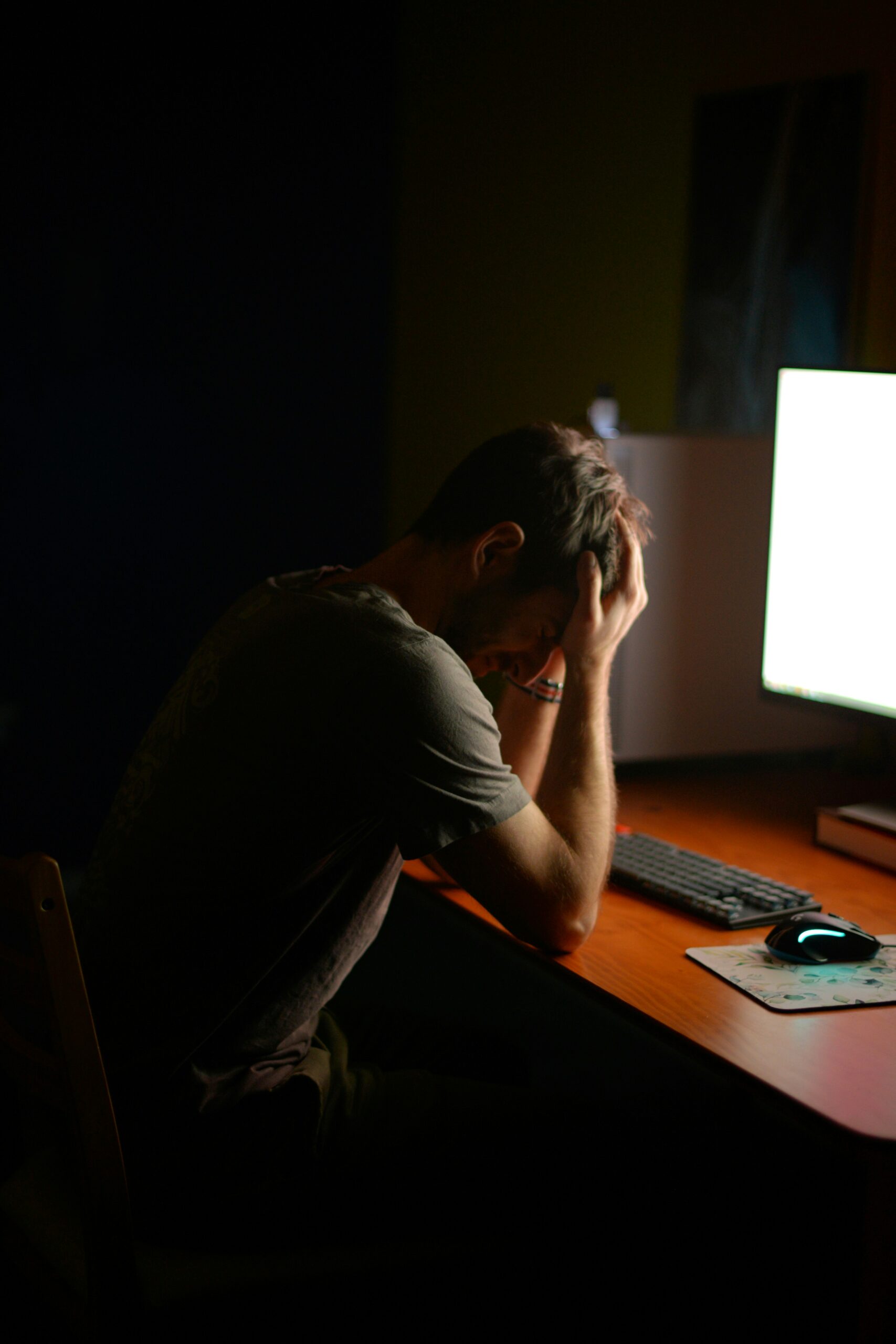

The Shocking Reason Stress Feels Worse at Night: Your Brain Secretly Messes With Your Sleep Cycle
Have you ever noticed stress never hits you as hard as it does the moment you lay your head on the pillow? You’re finally still, the world quiets down… and suddenly your thoughts explode.
This isn’t your imagination.
In this comprehensive blog post, you’ll learn exactly why stress feels worse at night, what your brain is doing behind the scenes, and how you can break the cycle so nights become peaceful again, not prolonged anxiety marathons.
We’ll pull in scientific findings, neurological insights, and real-world lifestyle impacts to explain what’s happening, and how to fix it.
Why Stress Feels Worse at Night: The Brain’s Hidden Mechanisms
Every human being has an internal clock, a body rhythm that regulates sleep, hormones, and mood throughout the 24-hour cycle. This biological clock is scientifically known as your circadian rhythm, and it dictates when levels of key hormones like cortisol and melatonin rise and fall. (Biology Insights)
Here’s the twist: stress redirects your brain’s natural rhythm right when you need it most — at night.
During the daytime, distractions and activities help keep anxious thoughts at bay. But once things go quiet at night:
- The brain becomes more aware of internal sensations and thoughts.
- There’s less external activity to distract you.
- Hormonal balancing, especially cortisol and melatonin, gets interfered with by stress. (Integris Health)
All of these combined make nights feel sharper, louder, and more overwhelming, even if your brain was managing stress well during the day.
Hormone Imbalance: Cortisol and Melatonin at War
Your body primarily relies on two hormones to regulate stress and sleep:
Cortisol: The Stress Hormone
- Peak levels naturally appear in the morning to help you wake up alert.
- Levels should drop steadily throughout the day.
- When chronically stressed, cortisol stays elevated into the night, keeping your brain in “alert mode.” (Biology Insights)
Melatonin: The Sleep Hormone
- Melatonin signals your body that it is time to fall asleep.
- It begins rising in the evening as cortisol drops.
- Stress interrupts this pattern by keeping cortisol artificially high, which suppresses melatonin production. (Integris Health)
This inverted hormone relationship helps explain why your brain feels so awake at night, even when your body is physically tired.
Table: Cortisol vs. Melatonin at Night
| Aspect | Cortisol (Stress) | Melatonin (Sleep) |
|---|---|---|
| Peak Time | Morning | Evening |
| Function | Alertness, stress response | Sleep initiation and regulation |
| Under Stress | Can remain elevated at night | Suppressed due to high cortisol |
| Effect on Sleep | Prevents relaxation | Reduced sleep quality |
| Why It Matters | Keeps you wired | Helps sleep onset |
Your Brain’s Quiet Mode Works Against You
When the sun sets:
- Distractions reduce
- Brain stops processing external stimuli
- Internal thoughts grow louder
This means your brain turns inward, making concerns and stress feel more intense because there’s nothing else for your attention. This matches research showing that negative emotions can gain strength at night due to circadian rhythm effects and reduced coping distractions. (Integris Health)
The quiet isn’t calming, it’s amplification.
The Science Behind the Biological Clock and Stress Timing
Research from neuroscience confirms that stress impacts the biological clock differently depending on when it happens. Stress close to bedtime actually disrupts the internal clock’s rhythm more strongly than stress earlier in the day, making night the worst time for elevated stress signals. (Waseda University)
This means:
- A stressful afternoon or late meeting isn’t just stressful, it has outsize effects on night physiology.
- Chronically stressed brains struggle to down-regulate even after the stressful event is over.
- Your brain doesn’t just feel stressed, it becomes harder to switch off stress processing.
Why Stressful Thoughts Intensify at Night
There are psychological factors too:
1. Rumination
Once distractions fade, your brain has more bandwidth to replay, question, and worry about unresolved events.
2. Cognitive Overdrive
At night, the prefrontal cortex, the part that regulates emotion, isn’t as active as during the day. This can make anxious or catastrophic thoughts feel more intense and real. (Integris Health)
3. Emotional Memory Consolidation
Some studies suggest that emotional memories are strengthened during sleep processes, which can make worries feel heavier at night.
How Sleep Quality and Stress Create a Vicious Cycle
When stress interferes with sleep:
- You sleep less deeply
- You wake up more often
- Your cortisol regulation becomes disrupted
- Next day stress tolerance decreases
This becomes a feedback loop, poor sleep worsens stress, which worsens sleep, and so on. (Biology Insights)
5 Evidence-Based Ways to Calm Your Nighttime Stress
You don’t have to feel trapped. Here are proven, science-informed strategies to reduce why stress feels worse at night:
1. Stick To A Consistent Bedtime Routine
Regular schedules help reinforce your circadian rhythm.
2. Reduce Evening Light Exposure
Dim lights and avoid screens at least 60 minutes before bed to protect melatonin synthesis. (ScienceInsights)
3. Mindful Journaling
Writing down thoughts before bed reduces mental rumination and clears cognitive load.
4. Breathing and Relaxation
Practices like deep breathing or guided meditation activate the parasympathetic system, which counters stress arousal.
5. Get Morning Sunlight
Exposure to natural light early in the day strengthens your internal clock, making cortisol rhythms more reliable. (ScienceInsights)
When Should You Seek Professional Support?
If stress regularly prevents sleep, or you experience:
- Heart palpitations at night
- Persistent insomnia
- Extreme anxiety interfering with daily function
A healthcare provider or sleep specialist can evaluate whether medical intervention or therapy could support your recovery.
Below is a seamless clinical continuation that deepens the medical authority of the article, maintains narrative flow, and shifts the tone toward evidence-based explanation without becoming inaccessible. It is written to follow naturally after the conclusion or just before the practical tips section, depending on your editorial preference.
Why Stress Feels Worse at Night: Neurobiology, Brain Networks, and Threat Processing
To understand more precisely why stress feels worse at night, it is necessary to move beyond hormones alone and examine how the brain’s stress-processing networks behave across the sleep–wake cycle.
At night, the brain undergoes a functional reorganization. Neural resources shift away from externally driven attention and toward internally focused processing. This transition is adaptive for memory consolidation and emotional integration, but under chronic stress conditions, it can become maladaptive.
The amygdala, a limbic structure responsible for detecting threat and assigning emotional salience, becomes relatively more influential in the absence of strong top-down regulation from the prefrontal cortex. During the evening and early night hours, prefrontal inhibitory control naturally declines as part of circadian neurophysiology. As a result:
- Threat perception becomes exaggerated
- Emotional stimuli feel more intense
- Stressful memories gain prominence
This altered balance explains why stress feels worse at night even when no new stressors are present.
Why Stress Feels Worse at Night: Reduced Prefrontal Regulation
The prefrontal cortex (PFC) is essential for rational appraisal, emotional regulation, and cognitive control. During daytime hours, the PFC actively suppresses excessive amygdala activation, allowing individuals to contextualize stressors and maintain emotional balance.
At night, however:
- Prefrontal glucose metabolism decreases
- Executive control weakens
- Emotional regulation becomes less efficient
From a clinical perspective, this creates a state in which stress responses are less filtered and more visceral. Patients often describe nighttime stress as “irrational,” “overwhelming,” or “out of proportion,” not because the stress is imagined, but because regulatory neural circuits are temporarily downregulated.
This neurobiological shift is a central reason stress feels worse at night, particularly in individuals with high baseline stress or anxiety disorders.
Why Stress Feels Worse at Night: The Role of the Default Mode Network
Another critical contributor is the default mode network (DMN) — a network of brain regions active during rest, introspection, and self-referential thought.
At night, DMN activity increases. This network is responsible for:
- Mental time travel (replaying past events)
- Anticipating future outcomes
- Self-evaluation and internal narrative construction
In healthy states, this supports reflection and emotional processing. Under stress, however, increased DMN activation leads to:
- Rumination
- Catastrophic thinking
- Persistent worry loops
Clinically, this manifests as repetitive thought patterns that intensify emotional distress, reinforcing the subjective experience that stress feels worse at night.
Why Stress Feels Worse at Night: Autonomic Nervous System Imbalance
From a physiological standpoint, nighttime stress reflects dysregulation of the autonomic nervous system (ANS).
Ideally, evening hours should be dominated by parasympathetic activity, which promotes rest, digestion, and recovery. Chronic stress disrupts this shift, maintaining sympathetic dominance well into the night.
Key consequences include:
- Elevated heart rate variability instability
- Increased muscle tension
- Heightened interoceptive awareness (awareness of bodily sensations)
This autonomic imbalance explains why nighttime stress often presents with physical symptoms such as chest tightness, shallow breathing, gastrointestinal discomfort, or a sense of internal agitation.
Why Stress Feels Worse at Night: Sleep Pressure and Cognitive Vulnerability
As sleep pressure builds throughout the day, cognitive resilience declines. Neurobehavioral research shows that fatigue reduces the brain’s capacity to cope with emotional stimuli.
By nightfall:
- Emotional reactivity increases
- Cognitive flexibility decreases
- Negative bias becomes more pronounced
In clinical terms, this creates a state of cognitive vulnerability, where stressors that were manageable during the day feel disproportionately severe. This phenomenon further reinforces why stress feels worse at night, even in the absence of new triggers.
Why Stress Feels Worse at Night in Chronic Stress and Anxiety Disorders
In individuals with chronic stress exposure, generalized anxiety disorder, or trauma-related conditions, nighttime stress is often more pronounced due to long-term neuroplastic changes.
These may include:
- Amygdala hyperreactivity
- Reduced hippocampal inhibition of stress responses
- Altered circadian gene expression
Such changes make the stress system slower to deactivate, particularly during periods of reduced external stimulation, such as nighttime.
Clinically, this explains why nighttime stress is often one of the last symptoms to resolve during recovery.
Why Stress Feels Worse at Night: Clinical Implications
Understanding why stress feels worse at night has important implications for treatment and self-management:
- Interventions must target circadian alignment, not just stress reduction
- Evening routines should emphasize nervous system downregulation
- Cognitive strategies are often less effective late at night compared to somatic or physiological techniques
This is why interventions such as controlled breathing, light regulation, and sleep-timed behavioral strategies are often more effective than purely cognitive approaches in the evening hours.
Clinical Takeaway: Reframing Nighttime Stress
From a medical and neurobiological perspective, nighttime stress is not a failure of willpower, resilience, or mental strength. It is the predictable outcome of circadian neurobiology interacting with chronic stress physiology.
When patients understand that stress feels worse at night because the brain’s regulatory systems are biologically less active, shame and self-blame decrease, which in itself reduces stress intensity.
Nighttime stress, therefore, should be approached not as something to fight cognitively, but as a signal that the nervous system requires structured, physiological support.
Conclusion: Why Stress Feels Worse at Night: And What You Can Do
Understanding why stress feels worse at night is empowering. It turns what feels like a personal flaw into a biological phenomenon, one that your brain is doing behind your back but you can influence.
Your nervous system is built to protect you; even if it doesn’t always feel that way. By working with your body’s internal rhythms, not against them, you can reclaim your nights and finally quiet the nighttime storm of worry.
Resources & Further Reading
Do Follow External Links
- For a detailed explanation of how cortisol and melatonin affect sleep cycles, see Melatonin and Cortisol’s Impact on Sleep and Stress by Biology Insights. Learn how these hormones regulate sleep and stress
- For science-based strategies to improve sleep hygiene and hormone balance, explore How to Alter Your Nighttime Routine to Reduce Stress at INTEGRIS Health. Proven nighttime stress reduction tips
Internal Links from Daxym.com
- How to Build a Nighttime Routine That Actually Improves Sleep Quality
- Top 10 Meditation Techniques for Deeper Sleep
- Understanding Circadian Rhythms for Better Health